Black Sheep in the Solar Business: How to Recognise Real Quality
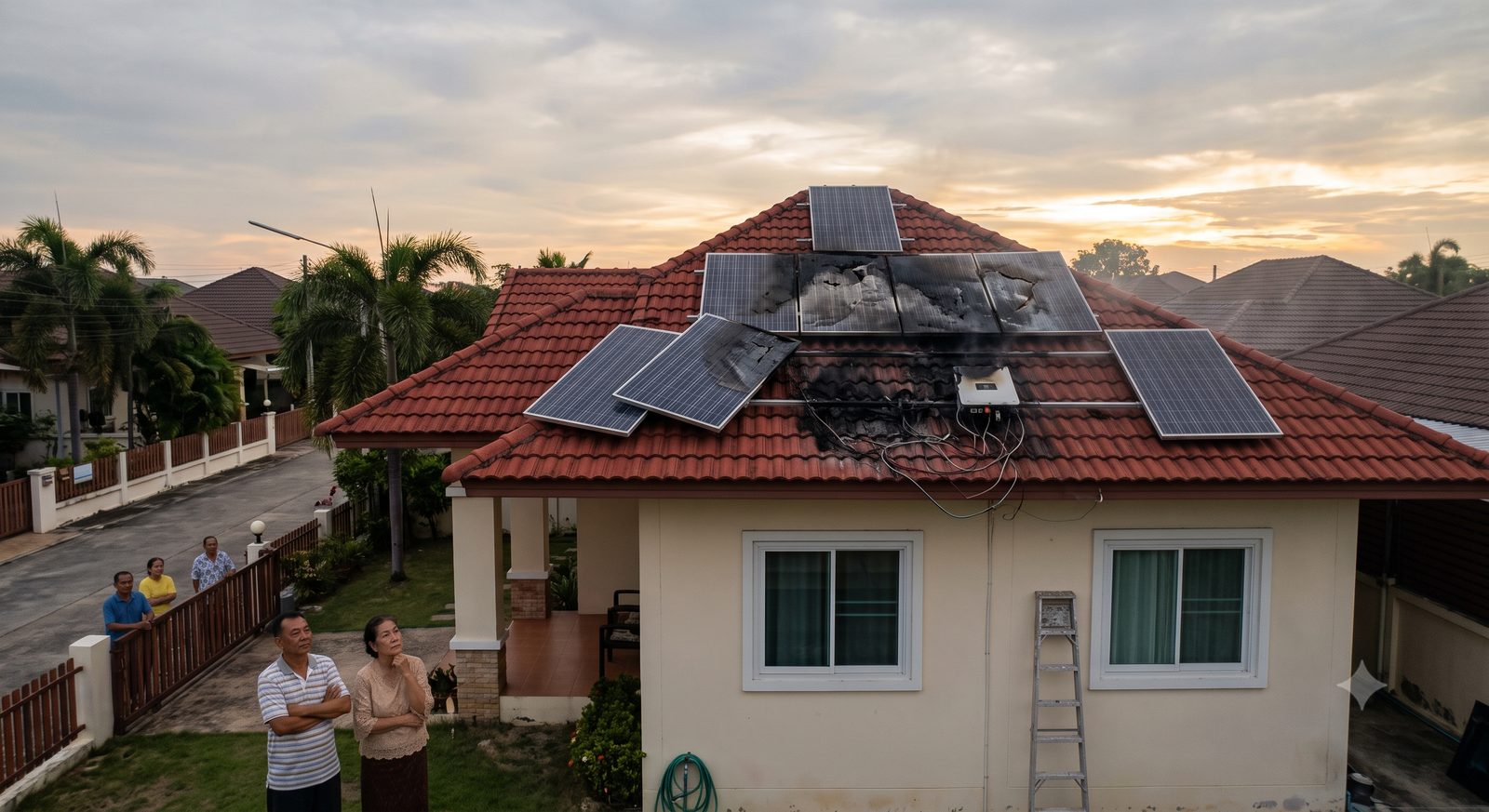
Solar is booming in Thailand, and where a market grows quickly, corners get cut. Most quotes look remarkably similar on the surface - familiar panel brands, a known inverter, an attractive price. The differences that decide whether a system is safe and still performing in fifteen years are almost always in the parts nobody puts in the brochure.
Where Costs Get Cut First
Registering the system with the PEA or MEA involves an official inspection of sizing, wiring, grounding and protection. It is currently not enforced as an obligation on private owners, but both authorities actively encourage it - and it remains the only genuine quality check carried out by someone other than your installer.
An installer who does not offer registration, or actively discourages it, is often avoiding an inspection their work would not pass. Treat that as decisive information, not as a minor administrative detail.
Registration Tells You a Lot
A price that sits far below every other quote is not a bargain waiting to be claimed. It reflects a decision made somewhere in that list - usually in a place you cannot see from the ground.
A properly built system is unremarkable in the best sense. Cables are routed in UV-resistant conduit, secured at regular intervals and labelled. DC and AC sides are clearly separated. Protective devices are branded and correctly rated. Roof penetrations are sealed and flashed. The documentation handed over includes datasheets, warranty certificates, a wiring diagram and the registration approval.
Practical Checks Before You Sign
Solar-rated copper, double-insulated and UV-resistant, is essential on a Thai roof. Aluminium wiring costs a fraction and looks identical once installed. It heats up faster under load and degrades far quicker under intense UV, raising the risk of insulation failure, voltage drop and, in the worst case, fire.
Fuses, breakers and surge protection are what stand between a fault and your building. Reputable manufacturers test these to trip reliably. Unbranded equivalents can fail silently - and you will not discover it until the day it was supposed to work.
A second-hand panel can look brand new. Its output has already degraded, its remaining life is shortened, and it usually carries no valid manufacturer warranty. Ask for serial numbers and datasheets, and verify the production year.
Rails, clamps and seals bear the load through every storm for two decades. Undersized or uncoated hardware corrodes in coastal air, and poorly sealed penetrations show up as leaks in the first heavy rainy season.
What Good Work Looks Like
- Ask for the full bill of materials in writing - not just panel and inverter, but cables, breakers, surge protection and mounting hardware, each with brand and model.
- Ask for the panel production year and serial numbers, and confirm the warranty is registered in your name.
- Ask whether PEA or MEA registration is included, and who submits the documentation.
- Ask to visit a completed installation of similar size, ideally one that is at least two years old.
- Ask who handles service, where they are based, and what the response time is for a fault.
Quality in solar is largely invisible from the driveway - which is exactly why it is so easy to cut. Ask for the full material list, insist on registration, and choose a partner with a physical address and installations you can visit. A well-built system should quietly do its job for twenty years. That outcome is decided before the first panel goes up.
Questions about solar for your property?
Our experts are ready to help with a free consultation and personalised savings analysis.
Contact Our Experts →